
How to light a wood burner cleanly: kindling, top-down lighting and air controls
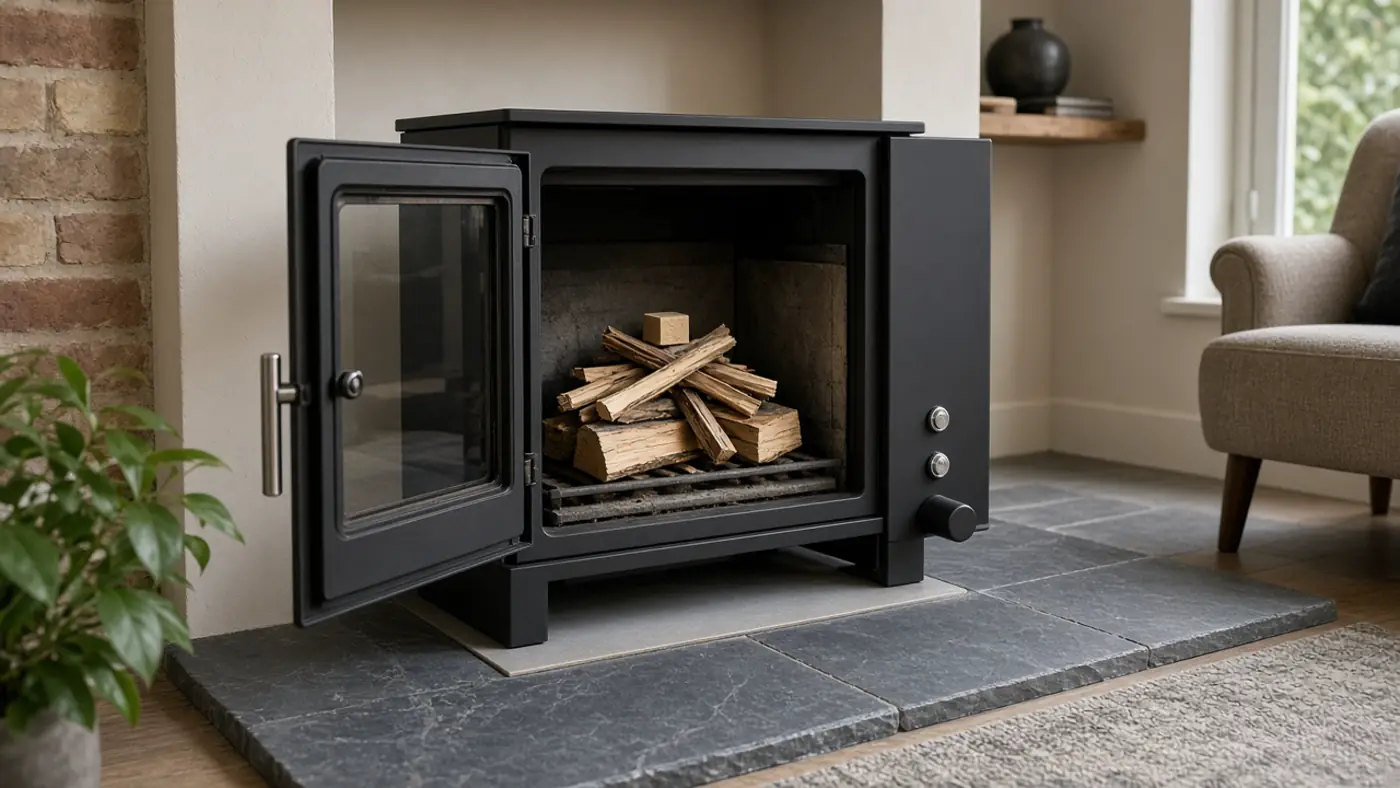
A clean start is dry fuel, plenty of kindling, and enough air. HETAS, Burnright and Defra publish the same sequence in public guidance: get the fire up to temperature, keep a bright flame, and do not starve the stove of air. This page restates those steps so you can light a wood burner without treating any gadget as a ranking.
Start with dry fuel and the stove instructions
HETAS advice on lighting a fire says different makers have varying lighting techniques to aid ease of use and reduce smoke. Always refer to the manufacturer’s instructions. In the absence of those instructions, contact an installer or chimney sweep. That warning comes before any layout of logs.
Burnright’s How to Burn Right page, published as public stove guidance, starts with plenty of small kindling or a suitable firelighter so the fire is quickly established. Wood should have 20 percent moisture or less. If you are buying logs, choose seasoned or kiln-dried wood under 20 percent moisture, and ask the supplier for the moisture reading or check with a moisture meter. Defra’s Burn Better pages use the same moisture line for dry wood.
Wet wood cannot give you that fast, hot start. HETAS lists evaporating moisture as one of the ways a stove loses heat, and Defra says wood above 20 percent moisture produces lots of smoke, particles and tar. See how to check firewood moisture and firewood moisture before you blame the air controls.
Kindling, firelighters and the top-down layout
HETAS says that for both popular methods you will need a firelighter, kindling and firewood, plus appropriate safety gloves and equipment. The traditional method lights kindling under the logs. The upside down, or top-down, method puts logs on the firebed and kindling on top. HETAS says the top-down layout helps the flue get up to temperature more quickly and removes the need to open the door to add fuel to the kindling, so the chamber is less likely to cool.
The HETAS top-down steps are: place two small logs across the firebed; place five pieces of kindling across those logs, then four pieces at a 90-degree angle, with two firelighters in the gaps; add another five pieces of kindling in the same direction as the bottom layer; set the controls to the lighting position; light the firelighters and close the door. HETAS says the fire will increase slowly, warming the flue without producing copious amounts of smoke. Leave the kindling until the top of the appliance is warm, then follow the maker’s air settings as the kindling falls between the logs.
Burnright points people to its Advanced Woodburning page for the top-down method, and keeps a shorter public list for everyday use: plenty of kindling, air controls fully open, door closed, then at least ten minutes of burning before you reduce the controls. Both sources treat kindling as the tool that gets the stove hot. Softwood kindling is the usual match for that job, as HETAS notes that softwoods light easily. See how ash, oak, beech and birch burn once the fire is established.
Air controls after the fire is alight
Burnright’s public steps say: set all air controls fully open, light the fire and close the stove door. For stoves, burn for at least ten minutes. It takes time to get up to temperature. You may need to refuel. Set air controls once operating temperature is reached. All stoves differ, so check the instructions.
HETAS, in its efficiency advice, says air supply is vital. Too little air gives a slow, smoky fire in which gases cannot burn fully. Too much air pulls heat out of the stove and up the chimney. The practical list is: use dry wood at 20 percent or less, get the fire up to temperature, keep a steady active flame, avoid letting the fire smoulder, and refuel enough wood to keep the fire going without smothering the flames. Closing the air overnight to make logs last is what HETAS calls slumbering: a very inefficient burn, and incredibly dangerous, because incomplete combustion produces more carbon monoxide. A working carbon monoxide alarm is essential. See wood burner efficiency and chimney sweeping and stove safety.
Burnright adds a chimney check: there should be no smoke except when lighting or perhaps refuelling. HETAS lists blackened glass, a fire that struggles to stay lit, and dark smoke once the stove should be hot as signs of a poor burn. Clear glass and lively flames are the everyday signs of a cleaner fire.
What not to put on the fire
HETAS says household waste is not the right fuel. Use the fuel the appliance is designed for. Defra says not to burn treated waste wood, such as old furniture, pallets or fence panels, or household rubbish. Those fuels can emit harmful fumes. In a smoke control area, GOV.UK says you cannot emit smoke from a chimney, and wood can only be burned in a Defra-approved exempt appliance.
- Use seasoned or kiln-dried wood under 20 percent moisture, and ask the supplier for a reading or check with a moisture meter.
- Follow the stove maker’s lighting steps, or the HETAS top-down layout if the manual is silent.
- Keep air controls open until the stove is up to temperature, then set them as the maker describes.
- Do not slumber the fire, and do not burn waste or treated wood.
Then find local log suppliers for dry logs and kindling. Open the supplier database if you want published product notes. Optional listing plans are Free, Featured at £95 a year and Premium at £199 a year. Those plans do not change how you light the stove. Dry fuel, kindling and open air controls still do that job.
Common questions
Should I light a wood burner from the top or the bottom?
HETAS describes two popular methods: a traditional layout and an upside down, or top-down, method. Always follow the stove maker’s instructions first. In the absence of those instructions, HETAS says to contact an installer or chimney sweep.
How long should air controls stay fully open after lighting?
Burnright says to set all air controls fully open, light the fire and close the stove door, then burn for at least ten minutes so the stove can come up to temperature. All stoves differ, so check the instructions.
What fuel should I use to light the stove?
Burnright and HETAS both start with dry wood at 20 percent moisture or less, plus kindling and a firelighter. Buy seasoned or kiln-dried logs under 20 percent moisture, and ask the supplier for the moisture reading or check with a moisture meter. Do not burn household waste or treated wood.
How do I know the fire is burning cleanly?
Burnright says you can check by looking at the chimney: there should be no smoke except when lighting or perhaps refuelling. HETAS lists clear glass and a lively flame as everyday signs of a cleaner burn, and a smoky, struggling fire as a warning.