
Chimney sweeping and stove safety before winter
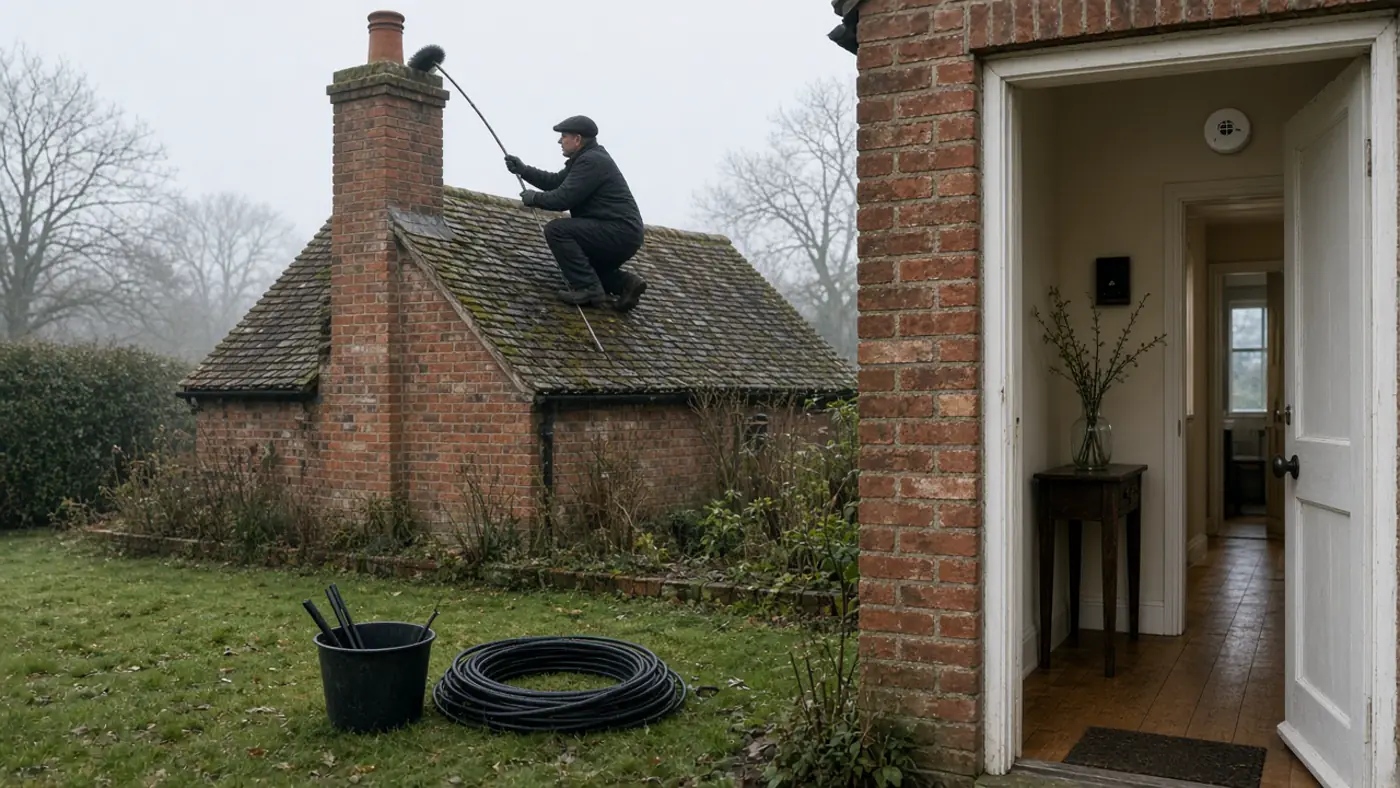
Before the heating season, two jobs sit above a new load of logs: a swept flue, and a working carbon monoxide alarm. HETAS publishes how often to sweep a wood-burning chimney. Defra’s Burn Better pages add an annual service checklist. In England, Building Regulations guidance from 1 October 2022 extended carbon monoxide alarms to solid-fuel installations.
How often to sweep a wood-burning chimney
HETAS encourages chimney sweeping at least twice a year when you burn wood, and at least once a year when you burn smokeless fuels. The useful times are just before the start of the heating season, and after the stove has not been used over a prolonged period. If you sweep twice, the second visit should be after the peak of the main heating season.
Defra’s Burn Better, Breathe Better pages put the public minimum at least once a year. Soot and tar build up in the chimney over time, reducing its efficiency and increasing the risk of chimney fires. HETAS still encourages the extra sweep when the fuel is wood. Wet wood raises tar and creosote, which is why burning wet wood belongs in the same winter checklist as the sweep.
Use a professional sweep
HETAS recommends that chimney sweeping is carried out by a HETAS Approved Chimney Sweep. To maintain standards, HETAS is associated with the Association of Professional Independent Chimney Sweeps (APICS), the Guild of Master Chimney Sweeps, the National Association of Chimney Sweeps (NACS) and Sweep Safe. All HETAS Approved Chimney Sweeps can provide an identity card. Always ask to see identification before a sweep carries out any work.
Defra’s Burn Better pages point householders to three public lists: the Federation of British Chimney Sweeps, the HETAS Book a Sweep webpage, and Sweep Safe. Lighting steps sit in how to light a wood burner cleanly.
Stove checks Defra lists for every season
Defra says regular maintenance means the stove will perform better, use less fuel to produce more heat, and produce fewer harmful particles. Get the stove installed by an installer registered on a competent person scheme certified by HETAS, APHC, BESCA, Certsure, NAPIT or OFTEC. Get the stove serviced once a year. Always use the stove in line with the manufacturer and installer’s guidance, including only burning suitable fuels.
The same Defra list of householder jobs is: clean out the ash, check firebricks for cracks, clean the stove glass, check the seal around the stove door, and clean the outside of the stove or open fire. Those checks do not replace a sweep.
Carbon monoxide alarms in England from 2022
Carbon monoxide is colourless and odourless. HETAS says a working alarm is essential because it is the only way to detect that gas, and warns against slumbering a stove by closing the air overnight. Incomplete combustion produces more carbon monoxide. See wood burner efficiency for that air-control warning.
A new edition of Approved Document J came into force in England on 1 October 2022. The official circular letter says a carbon monoxide alarm should be fitted upon the installation of fixed combustion appliances that burn solid fuels, gas fuels (excluding gas appliances used solely for cooking) and oil fuels. That includes new homes, and new or replacement fixed appliances in existing homes. Alarms should comply with BS EN 50291. They should be powered by a battery designed to operate for the working life of the alarm, with a warning when that life is due to pass, or be a mains-powered alarm with fixed wiring (not plug-in) and a sensor-failure warning.
Approved Document J also updates placement. The alarm should be in the same room as the appliance, on the ceiling at least 300 millimetres from any wall, or on a wall as high up as possible (above doors and windows) but not within 150 millimetres of the ceiling, and between 1 metre and 3 metres horizontally from the appliance.
A separate rule covers rented homes. The Smoke and Carbon Monoxide Alarm (Amendment) Regulations 2022 came into force on 1 October 2022. Relevant landlords in England must equip a carbon monoxide alarm in any room used as living accommodation which contains a fixed combustion appliance, excluding gas cookers. GOV.UK says those regulations do not apply to owner-occupiers. Local authorities can impose a fine of up to £5,000 where a landlord fails to comply with a remedial notice.
Dry fuel after the sweep
A clean flue still needs dry wood. Buy seasoned or kiln-dried logs under 20 percent moisture. Ask the supplier for the moisture reading, or check with a moisture meter. Defra says wet wood produces tar deposits that damage the appliance and chimney and raise the risk of chimney fires. After the sweep, find local log suppliers who state a moisture figure, then keep the stack dry as in how to store firewood outdoors.
- Book a professional sweep before the heating season, and a second sweep after the peak if you burn wood.
- Ask to see a HETAS Approved Chimney Sweep identity card.
- Fit a working carbon monoxide alarm in the stove room, and test it as the maker describes.
- Burn wood at 20 percent moisture or less, and do not close the air to slumber the fire.
Log Price Guide is a free directory. Optional listing plans are Free, Featured at £95 a year and Premium at £199 a year. Open the supplier database or a county hub once the flue is clear. Confirm current fuel details with the business before you order.
Common questions
How often should I have a wood-burning chimney swept?
HETAS encourages sweeping at least twice a year when you burn wood, and at least once a year when you burn smokeless fuels. Defra’s Burn Better pages say to get your chimney swept at least once a year by a chimney sweep. If you sweep twice, HETAS says useful times are just before the heating season and after the peak of that season.
Who should sweep the chimney?
HETAS recommends a HETAS Approved Chimney Sweep and says every approved sweep can show an identity card. Defra points householders to the Federation of British Chimney Sweeps, the HETAS Book a Sweep webpage, and Sweep Safe.
Do owner-occupiers in England need a carbon monoxide alarm for a stove?
Approved Document J, in force from 1 October 2022, says a carbon monoxide alarm should be fitted when a fixed solid-fuel appliance is installed in a new home, and when a new or replacement fixed appliance is installed in an existing home. HETAS also says a working carbon monoxide alarm is essential because it is the only way to detect that gas. The 2022 landlord alarm regulations apply to rented homes, not to owner-occupiers.
What changed for rented homes in England in 2022?
From 1 October 2022, the Smoke and Carbon Monoxide Alarm Amendment Regulations require relevant landlords in England to equip a carbon monoxide alarm in any room used as living accommodation that contains a fixed combustion appliance, excluding gas cookers. Local authorities can impose a fine of up to £5,000 where a landlord fails to comply with a remedial notice.