
Wood burner efficiency: how to get more heat from dry logs
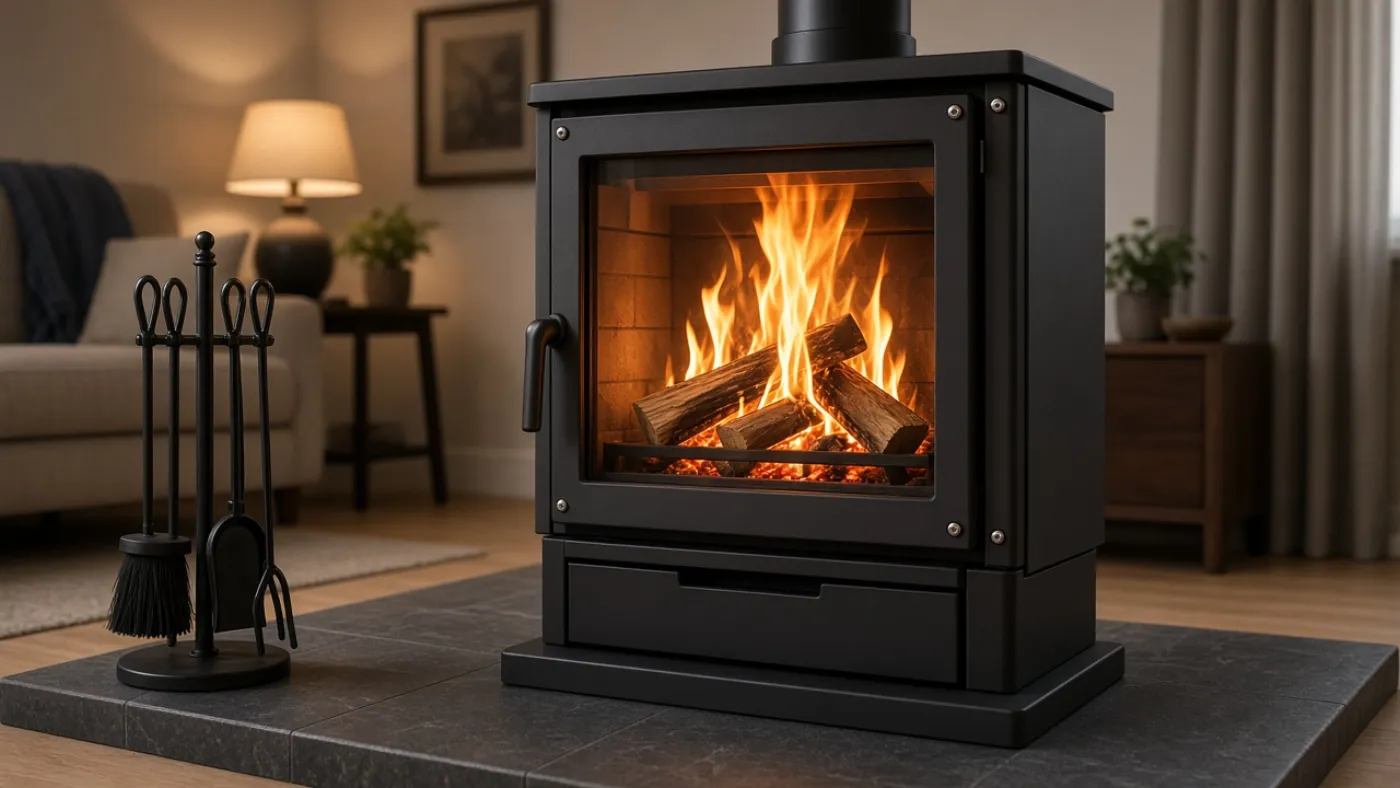
A wood burner only turns logs into room heat if the fuel is dry and the fire can burn the gases as well as the wood. HETAS publishes clear figures for what a modern stove can do, and what everyday habits take away. Moisture is the first buying decision. Air controls and sweeping come next.
What efficiency means on a stove
HETAS explains log burner efficiency as the share of energy in the fuel that becomes heat for the home. In ideal conditions, HETAS says you can expect recent stoves to achieve around 70 to 85 percent efficiency, but the figure depends heavily on how the stove is used. If the stove is 80 percent efficient, about 80 percent of the energy becomes room heat and the rest is lost, mostly as hot gases up the chimney.
The same HETAS article says an open fire can lose almost 80 percent of the heat up the chimney. A closed modern stove is built to do much better than that. HETAS also says that in real homes, the wrong fuel, skipped maintenance or poor use of the air controls can cut efficiency sharply. In some cases you could lose up to 50 percent of the stove’s efficiency.
The Clean Air Strategy 2019 said only the cleanest stoves would be available for sale by 2022. A newer stove still needs dry fuel and the right air setting.
Dry wood is the first efficiency control
HETAS lists three ways a stove loses heat when it is not up to temperature: hot gases leaving up the chimney, incomplete combustion that sends unburnt gases out as smoke, and evaporating moisture. That third loss is the one you buy your way out of. Wet wood means a large portion of energy is used to boil water before the logs can burn. The fire runs cooler, combustion suffers, and you get more smoke and soot.
HETAS says wood should have a moisture content of 20 percent or less to burn effectively, and points buyers to the Ready to Burn mark. GOV.UK says the same 20 percent figure is what Ready to Burn certification confirms on sales of less than 2 cubic metres. The official customer notice for larger sales calls wet wood an inefficient way to heat your home. Defra’s Burn Better pages say dry wood has better heat efficiency and produces less smoke.
That is why this efficiency guide starts at the fuel, not at a gadget. Find local log suppliers who state Ready to Burn or a moisture figure, then keep the stack dry. See kiln-dried versus seasoned logs for the labels, and burning wet wood for the sale rules and health risks.
Air controls, smouldering and carbon monoxide
HETAS says air supply is vital. Too little air gives a slow, smoky fire in which gases cannot burn fully. Too much air pulls heat out of the stove and up the chimney. Each stove is different, so the operating instructions are the place to learn the controls. HETAS’s practical list is: use dry wood at 20 percent or less, get the fire up to temperature, keep a steady active flame, avoid letting the fire smoulder, and refuel enough wood to keep the fire going without smothering the flames.
Closing the air down overnight to “make the logs last” is what HETAS calls slumbering. HETAS says it is a very inefficient burn and incredibly dangerous. Lower air means lower temperatures and more incomplete combustion, which produces less heat, more smoke and more dangerous gases, including carbon monoxide. A working carbon monoxide alarm is essential, HETAS says, because it is the only way to detect that gas. Follow the stove maker’s instructions rather than banking a sleepy fire.
HETAS is also clear that household waste is not the right fuel. Use the fuel the appliance is designed for. In a smoke control area, GOV.UK says wood can only be burned in a Defra-approved exempt appliance, and you must use the fuel types the manufacturer allows.
Sweeping and simple maintenance
HETAS encourages chimney sweeping at least twice a year when you burn wood, and at least once a year when you burn smokeless fuels. The useful times are just before the heating season, and after the peak of that season if you sweep twice. A soot-filled flue, worn stove rope or a deep ash bed all get in the way of a clean burn. HETAS links poor maintenance to more soot and a weaker fire.
HETAS lists blackened glass, a smoky fire that struggles to stay lit, the need to refuel every ten minutes, and dark smoke once the stove should be hot as signs of a poor burn. Clear glass, lively flames and little visible smoke after the fire is established are the everyday signs of a cleaner burn.
Buying fuel that lets the stove work
- Choose wood at 20 percent moisture or less, with Ready to Burn on small-volume sales.
- Know the delivered volume so you can apply the right sale rule. See cubic metres, bulk bags and loose loads.
- Store the delivery under cover so dry wood stays dry. See outdoor storage.
- Match log length to the stove the maker describes, and never burn household waste.
Log Price Guide is a free place to discover local log suppliers and read published product notes. Open a listing, check the moisture or Ready to Burn wording, then confirm the current stock with the business. Optional supplier plans are Free, Featured at £95 a year and Premium at £199 a year. Those plans affect how a listing is shown, not how your stove burns. The heat you get still depends on dry wood, enough air and a swept chimney.
Common questions
What efficiency can a modern wood burner reach?
HETAS says that in ideal conditions you can expect recent stoves to achieve around 70 to 85 percent efficiency, but the figure depends heavily on how the stove is used. The same advice says you could lose up to 50 percent of that efficiency if the fuel, air controls or maintenance are wrong.
Does wet wood really waste heat?
Yes. HETAS lists evaporating moisture as one of the three main ways a stove loses heat: energy is used to boil water out of wet wood instead of warming the room. The official GOV.UK notice also calls wet wood an inefficient way to heat your home. Use wood at 20 percent moisture or less.
How often should I have the chimney swept if I burn wood?
HETAS encourages having your chimney swept at least twice a year when burning wood, and at least once a year when burning smokeless fuels. Useful times are just before the heating season and after the peak of that season.
Can I close the air controls overnight to make logs last?
HETAS advises against slumbering, which means cutting the air to keep a fire ticking over. It is an inefficient burn and can produce more smoke and carbon monoxide. Fit a working carbon monoxide alarm and follow the stove maker’s instructions.