
Ash, oak, beech and birch: how different firewood species burn
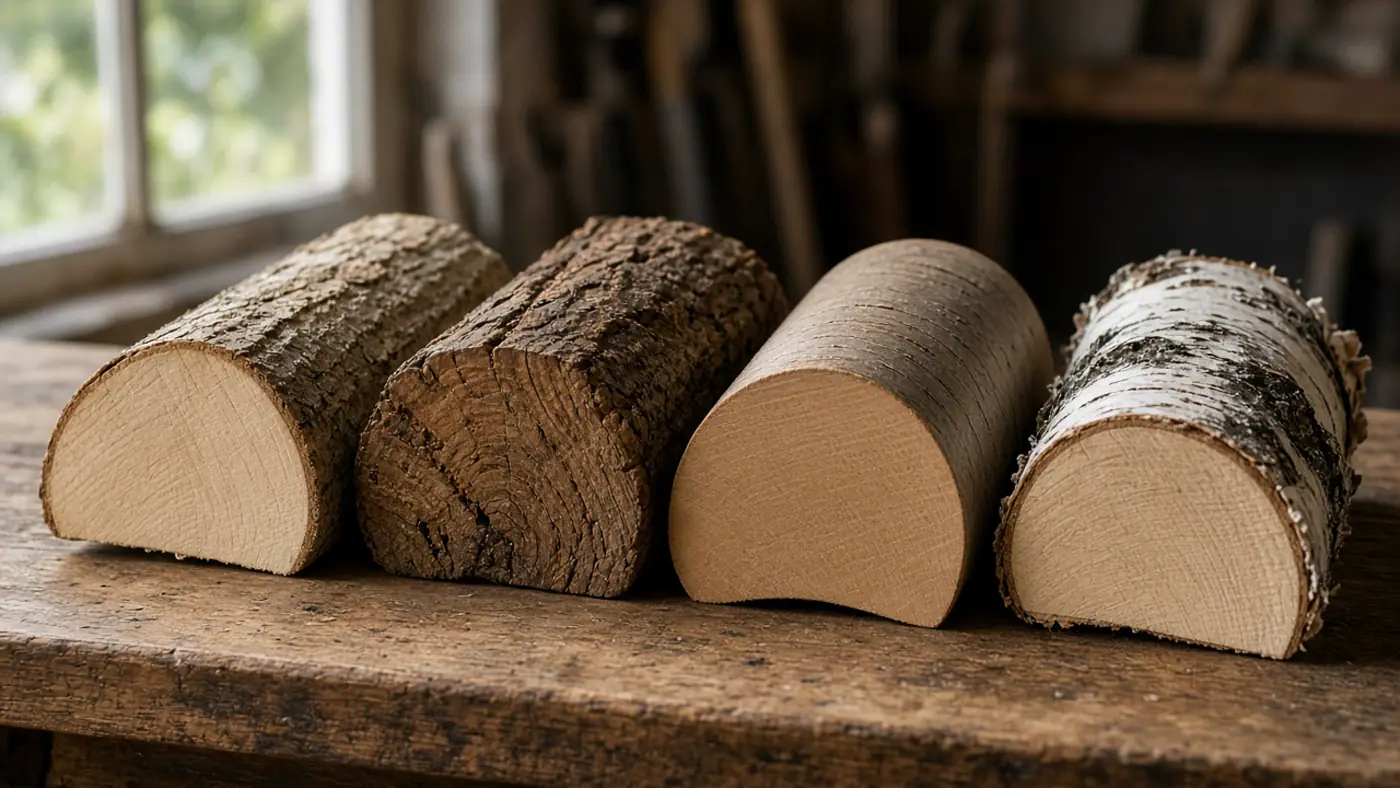
Ash, oak, beech and birch are the hardwood names UK stove owners see most often. They are not a league table. Official guidance treats moisture first, then density. This guide sets out what HETAS and the Forestry Commission publish about those four species, so you can read a listing without treating any name as a score.
Moisture first, then species
HETAS fuel advice is clear: whatever species of wood you burn, it must have a moisture content of 20 percent or less. Wet wood gives off less heat, produces excessive smoke, and coats the chimney in soot and tar. GOV.UK uses that same 20 percent figure for small-volume sales in England. Ask the supplier for the moisture reading, or check with a moisture meter.
The Forestry Commission Wood as Fuel technical supplement (Crown copyright) says three things affect calorific value: species, wood density and moisture content. Moisture has the greatest effect of any of those variables. Water in the timber is not fuel, and it has to evaporate before the wood will burn. That is why our moisture meter guide sits beside this species page.
Defra’s guide to buying, storing and seasoning wood groups oak, ash and birch as hardwoods that tend to be denser and burn for a long period. Softwoods such as spruce tend to light more easily and can be useful for kindling, but they are less dense, so a similar sized log will give less heat and burn faster. Our hardwood versus softwood guide covers that split. This page stays with four named hardwoods.
Density, not a ranking
HETAS says hardwoods like oak, ash and beech are dense, burning longer and producing more sustained heat per log. Softwoods like pine, spruce and larch light easily and burn faster, which makes them useful for kindling and for establishing a fire. The amount of energy per kilogram across hardwoods and softwoods is actually very similar. The defining difference is density: you will need up to twice the volume of softwood to match the heat output of the same weight in hardwood.
The Forestry Commission supplement says the same in supplier language. Hardwoods tend to be denser. A tonne of hardwood logs occupies a smaller space than a tonne of softwood logs. Dense woods burn for longer, so you need fewer top-ups. If you measure wood by volume you will generally receive more kilowatt hours of heat from a cubic metre of hardwood than of softwood. That is a volume fact, not a league table of tree names.
There is little variation of calorific value between species when they are tested at the same moisture content. The main differences are how much water the timber holds when it is green, and how quickly that water leaves during seasoning.
Ash, oak, beech and birch as published
Ash, oak and beech are the three hardwoods HETAS names when it describes dense logs that burn longer. Birch sits with oak and ash in the Defra seasoning guide as a hardwood used for a long burn. The Forestry Commission sale-labelling notes in the same Wood as Fuel supplement list ash as its own species line, and list beech and birch as a species group that suppliers may declare on a pack.
On freshly felled timber the Forestry Commission table of typical green moisture (wet basis) gives ash at 32 percent, birch at 43 percent and oak at 47 percent. The same table gives kilowatt hours per green tonne as 3,448 for ash, 2,668 for birch and 2,635 for oak. Those figures describe wet, newly felled wood. The supplement says most of the variation in calorific value between species at felling is caused by the water already in the timber. Fresh poplar, for example, has about half the calorific value of fresh ash, but if both are dried to the same moisture they have a very similar calorific value per weight. Beech is not given a green-moisture row in that table, so we do not invent one.
HETAS says hardwood generally takes between eighteen months and two years to dry enough, in its seasoning advice. Time alone is not a moisture reading. A kiln-dried oak log and an air-seasoned ash log can both be dry enough if they meet 20 percent. See kiln-dried versus seasoned logs.
What this means when you order
Many UK listings sell mixed hardwood rather than a single species. That is a factual description of the load, not a gap. If a listing names ash, oak, beech or birch, treat that as the species mix, then still look for moisture. Buy seasoned or kiln-dried logs under 20 percent moisture. Ask the supplier for the moisture reading, or check with a moisture meter. On 2 cubic metres or more, the official customer notice and a meter reading on a split face are the checks.
HETAS says you should use the fuel the appliance is designed for. In a smoke control area, GOV.UK says wood can only be burned in a Defra-approved exempt appliance. Species does not replace those rules.
- Read the species line if the listing names one, or accept mixed hardwood as a stated mix.
- Check kiln-dried or seasoned wording, then ask the supplier for a moisture reading or check with a moisture meter.
- Know the delivered volume in cubic metres so the correct England sale rule applies.
- Store the load under cover so a dry hardwood stays dry. See outdoor storage.
Then find local log suppliers, or open the supplier database and the county hubs. Optional listing plans are Free, Featured at £95 a year and Premium at £199 a year. Those plans affect how a listing is shown. The fire you get still depends on dry wood, then on how much dense hardwood sits in each log.
Common questions
Does the tree species matter more than moisture?
No. HETAS says that whatever species you burn, it must have a moisture content of 20 percent or less. The Forestry Commission Wood as Fuel supplement says moisture content has the greatest effect on calorific value of any of the variables.
Is hardwood hotter than softwood by weight?
HETAS says the amount of energy per kilogram across hardwoods and softwoods is actually very similar. The defining difference is density: you will need up to twice the volume of softwood to match the heat output of the same weight in hardwood.
Why does freshly felled ash differ from freshly felled oak?
The Forestry Commission Wood as Fuel supplement lists typical green moisture on a wet basis as 32 percent for ash, 43 percent for birch and 47 percent for oak. Fresh ash therefore holds less water per tonne than fresh oak. Once both are dried to the same moisture, calorific value per weight is very similar.
What should I look for on a supplier listing?
Look for the species if it is named, or for mixed hardwood, plus kiln-dried or seasoned wording. Buy logs under 20 percent moisture, whatever the species mix, and ask the supplier for the moisture reading or check with a moisture meter.