
How to check firewood moisture content with a moisture meter
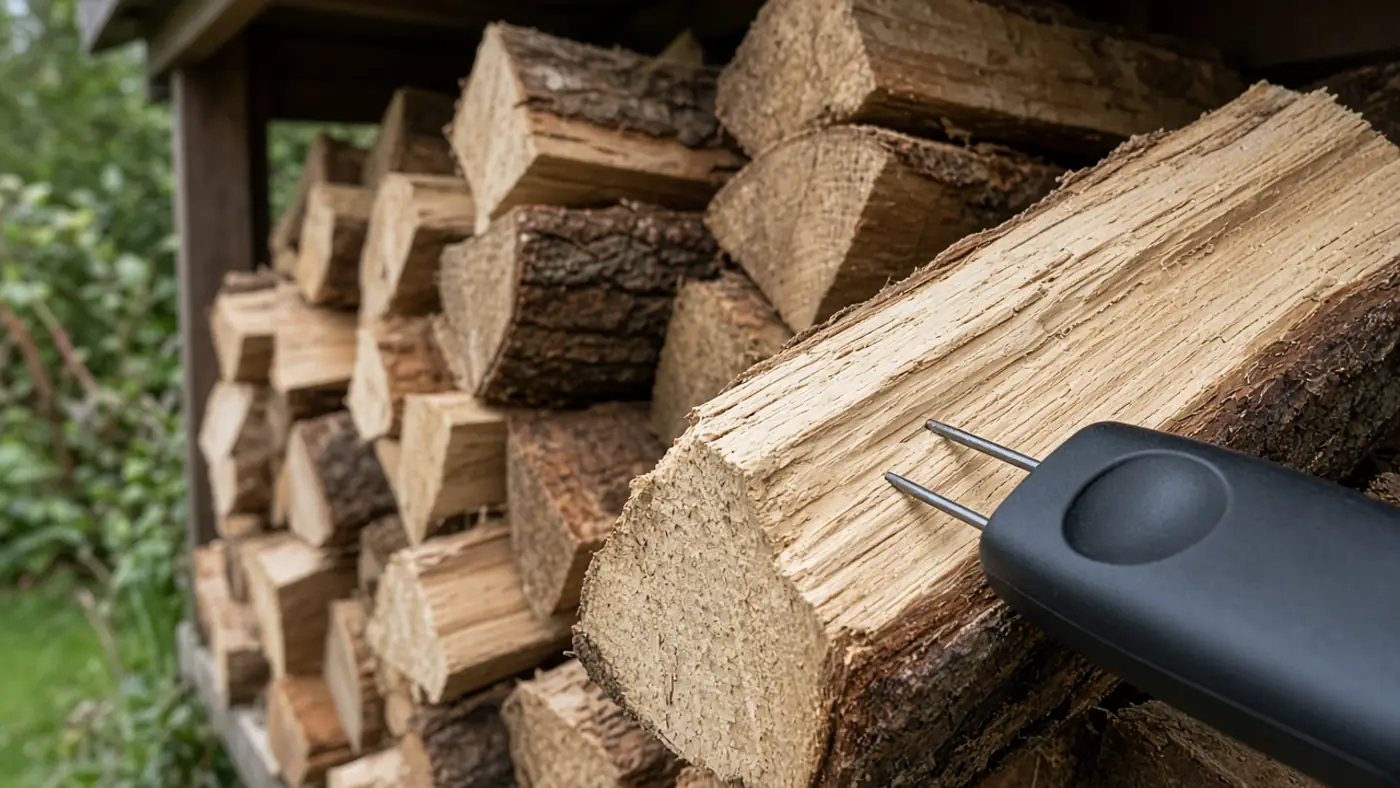
A bag label is not a moisture reading. Buy seasoned or kiln-dried logs under 20 percent moisture. Ask the supplier for the moisture reading, or check with a moisture meter. A pin meter is the home check HETAS and the official large-load notice both describe, as long as you split the log and read the centre of the fresh face.
Why 20 percent is the figure that matters
HETAS advice on checking moisture is to use dry firewood in a wood-burning stove, and to aim for a moisture content of 20 percent or lower. The same page says to follow the appliance maker’s instructions for any extra guidance. That 20 percent line is also the legal test for small-volume sales in England.
GOV.UK says wood sold for domestic use in England in volumes of less than 2 cubic metres must have a moisture content of 20 percent or less. That figure applies to firewood, briquettes and kindling in those smaller volumes. Buy seasoned or kiln-dried logs under 20 percent moisture. Ask the supplier for the moisture reading, or check with a moisture meter.
Defra’s Burn Better pages give the reason. Wood with a moisture content above 20 percent produces lots of smoke, particles and tar. That can damage the appliance and chimney, raise maintenance costs and raise the risk of chimney fires. Dry wood produces less smoke and has better heat efficiency. Our guide to burning wet wood sets out the sale rules and the health wording from GOV.UK.
How HETAS says to use a pin meter
HETAS recommends a moisture meter. HETAS says you can buy one for around £20 online or from a local DIY store. The method matters more than the brand name on the case.
HETAS sets out four controls. If the pin meter has variable settings, use the correct ones, including timber species, ambient temperature, and moisture content on a wet basis. Split the log and measure in the centre of the split surface as soon as possible, because the moisture content can change quickly. Take a representative sample from throughout the load, choosing logs from the middle of the pile as well as the surface. Keep the meter in good condition and do not run it on a low battery.
The official GOV.UK customer notice for large sales uses the same split-face test. It says to dry wood in a sunny, well-aired space for at least two years, keeping rain off in winter, and to test a freshly split surface with a moisture meter. Radial cracks and bark that comes off easily are only clues. The meter reading is the check.
Wet basis, dry basis and what the display means
HETAS explains that moisture content is measured in two ways. Wet basis is the normally accepted value used for wood fuel. Some meters also serve the construction trade and may be reading on a dry basis. A dry-basis number is not the 20 percent stove figure. If the device lets you choose, set it to wet basis before you treat the number as a stove reading.
The Forestry Commission Wood as Fuel technical supplement (Crown copyright) puts that difference in numbers. On a wet basis, if the oven-dry wood weighs 50 kilograms and the water also weighs 50 kilograms, the moisture content is 50 percent. On a dry basis the same sample would read 100 percent. HETAS stove advice uses the wet-basis 20 percent line.
That supplement also says a handheld meter only ever gives an indication. For a household stove, a pin meter used as HETAS describes is still the practical check, especially on a large load where you want your own reading.
What a listing can show, and what it cannot
On a sale under 2 cubic metres, buy seasoned or kiln-dried logs under 20 percent moisture. Ask the supplier for the moisture reading, or check with a moisture meter. Kiln-dried and seasoned are drying methods, not a moisture reading. See kiln-dried versus seasoned logs and firewood moisture.
A dry bag can still take on rain on an open drive. GOV.UK tells sellers to store dry wood so they do not sell it damaged or wet. The same storage job sits with you after delivery: a roof, air through the sides, and the stack raised off the ground. That is the advice in how to store firewood outdoors.
If you buy 2 cubic metres or more, the seller must still give you the customer notice. Do not burn that load until a split-face reading is at or below 20 percent. See what a cubic metre, a bulk bag and a loose load mean so you know which sale rule applies.
A short buying checklist
- On a small-volume order, ask the supplier for a moisture reading, or check with a moisture meter.
- On a large load, read the official notice and test a freshly split face before you light the stove.
- Set the meter to wet basis, split the log, and read the centre of the fresh face at once.
- Sample the middle of the pile, not only the dry-looking logs on top.
Then find local log suppliers on Log Price Guide, or open the supplier database and the county hubs. Confirm the current description and moisture details with the business before you order. Optional listing plans are Free, Featured at £95 a year and Premium at £199 a year.
Common questions
What moisture reading should firewood have in the UK?
HETAS says to aim for a moisture content of 20 percent or lower, and to follow the stove maker’s instructions. In England, GOV.UK uses that same 20 percent figure for sales of less than 2 cubic metres.
Where should I put the moisture meter pins?
HETAS says to split the log and measure in the centre of the split surface as soon as possible, because the reading can change quickly. Take samples from the middle of the pile as well as the surface.
Is a bag label the same as a meter reading?
Kiln-dried and seasoned are drying methods, not a moisture reading. A meter is a check you can do at home. Ask the supplier for the moisture reading, or test a freshly split face. GOV.UK still says to keep dry wood stored so it does not get wet again.
Do I need a meter if I buy 2 cubic metres or more?
Sales of 2 cubic metres or more in England are treated as a large load. The seller must give you the official customer notice. That notice tells you to dry the wood and to test a freshly split surface with a moisture meter before you burn it.