
Burning wet wood: the risks and the UK rules
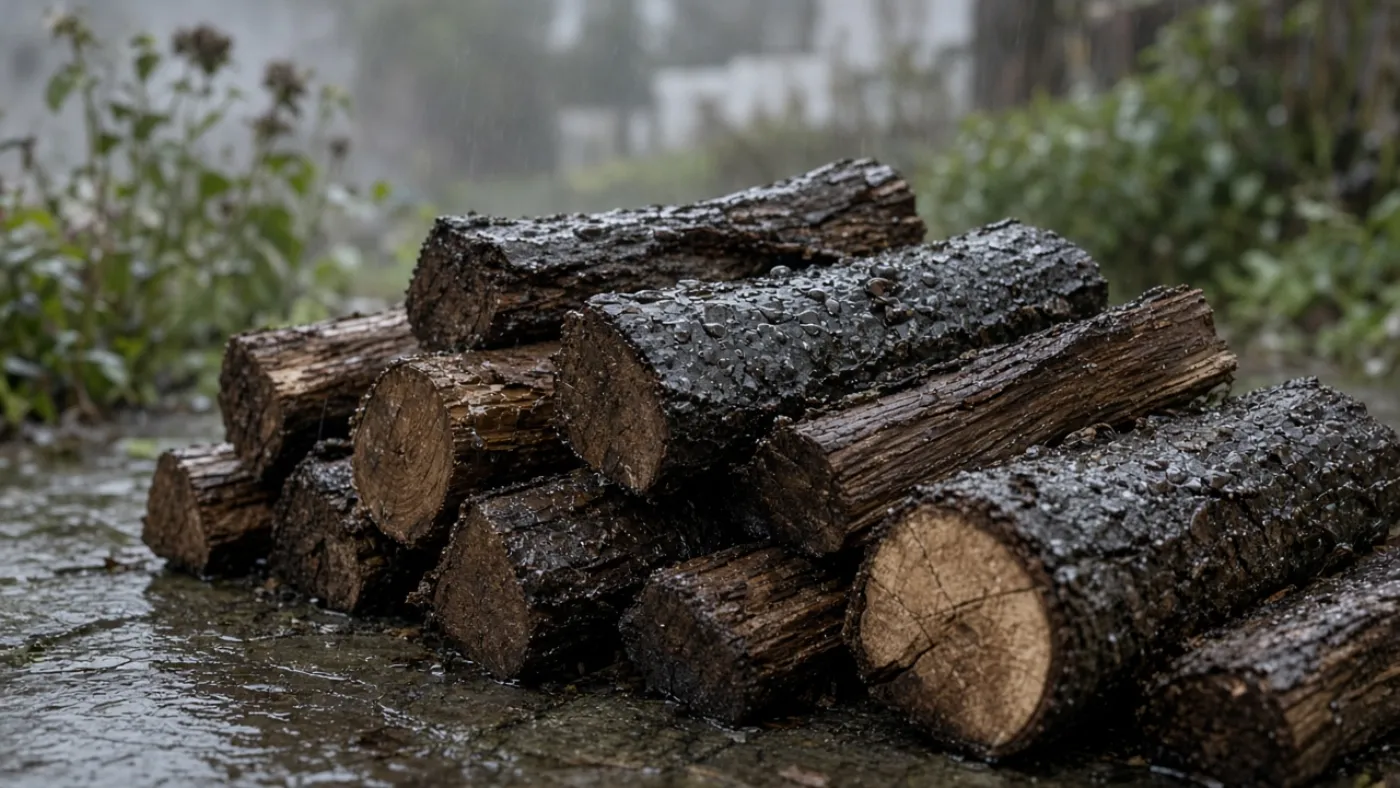
Wet wood is a stove problem and an air-quality problem. England now restricts the sale of high-moisture firewood for domestic use. This guide sets out the official risks, the Ready to Burn rules, and what the Clean Air Strategy said, so you can find dry fuel rather than guess from a bag label.
What wet wood does in the stove
The official GOV.UK customer notice is blunt. Wet wood contains moisture which creates smoke and harmful particulates when burnt. As well as being harmful to your health and the environment, this can damage your stove and chimney and is an inefficient way to heat your home. That wording is also in Schedule 2 of the Air Quality (Domestic Solid Fuels Standards) (England) Regulations 2020.
HETAS says freshly felled wood often has moisture up to 50 percent, and that you should only burn wood at 20 percent or less. Wet wood, HETAS says, gives much less heat per log, far more emissions, soot on the glass and flammable creosote in the chimney. Incomplete combustion raises carbon monoxide and other pollutants, and raises the risk of a chimney fire.
Defra’s Burn Better, Breathe Better pages repeat the same moisture line: wood with a moisture content above 20 percent produces lots of smoke, particles and tar. That can damage the appliance and chimney, raise maintenance costs and raise the risk of chimney fires. Dry wood produces less smoke and has better heat efficiency.
What the Clean Air Strategy set out
The Clean Air Strategy 2019 executive summary says burning wood and coal in open fires and stoves makes up 38 percent of the UK’s primary emissions of fine particulate matter (PM2.5). The strategy said the government would legislate to prohibit the sale of the most polluting fuels, and that only the cleanest stoves would be available for sale by 2022.
A later GOV.UK announcement confirmed that sales of wet wood under 2 cubic metres would be restricted from February 2021, and that larger volumes would be sold with advice on how to dry the wood before burning.
The Ready to Burn sale rules in England
GOV.UK guidance on selling wood for domestic use says you can only supply or sell wood fuel in volumes of less than 2 cubic metres if it is certified Ready to Burn. That certification confirms a moisture content of 20 percent or less. The rule covers firewood and wood briquettes in single retail bags, and the same fuels supplied as a bulk delivery in loose volumes of less than 2 cubic metres.
The Ready to Burn scheme is administered by Woodsure for wood fuel and by HETAS for manufactured solid fuels, following appointment by Defra. Packaging must show the logo, the supplier name and the certification number. Wood-fuel numbers start with WS and can be checked with Woodsure.
Sales of 2 cubic metres or more do not need that certificate. The supplier must still give you the official notice that the wood should not be burned until it is at or below 20 percent moisture. Local authorities enforce the rules. GOV.UK says a seller can receive a £300 fixed penalty, or a higher fine from the courts, for storing wood so it has a moisture content of more than 20 percent when it should meet the standard, or for missing or incorrect labelling.
Those sale rules are not a ban on every log you already own. They are the reason a shop net should be certified, and why an unlabelled bag is a warning sign. Our Ready to Burn guide covers the buyer checklist. This page is about why wet wood is restricted and what official sources say happens if you burn it.
Smoke control areas
GOV.UK smoke control area rules say you cannot release smoke from a chimney in those areas. You can only burn authorised fuel unless you use an appliance approved by Defra, also called an exempt appliance. In England you may have to pay a penalty of up to £300 if your chimney releases smoke in a smoke control area, and you can be fined up to £1,000 if you buy unauthorised fuel to use in an appliance that is not approved by Defra. Ask your council if your address is inside a smoke control area.
GOV.UK also requires sellers to inform customers that they can only use wood in an appropriate exempt appliance in a smoke control area. Wet wood makes visible smoke more likely. Even a listed stove will smoke if the fuel is wet. Use dry wood, and follow the stove maker’s fuel instructions.
How to check before you light the fire
- On a small-volume purchase, look for the Ready to Burn logo, supplier name and certification number.
- On a large load, read the official notice and do not burn the wood until it is at or below 20 percent moisture.
- Use a moisture meter on a freshly split face, as HETAS describes, and sample more than one log.
- Keep the stack under cover so certified wood does not get wet again. See outdoor storage.
If you want the drying-method labels rather than the legal test, read kiln-dried versus seasoned logs. If you want more heat from the same dry fuel, read wood burner efficiency.
To find local log suppliers, use the home search, the database or the county hubs. Ask for Ready to Burn details on small volumes, and for moisture information on larger loads. Then keep the delivery dry.
Common questions
Is it illegal to burn wet wood at home in England?
The Ready to Burn rules in the Air Quality (Domestic Solid Fuels Standards) (England) Regulations 2020 control the sale of wet wood, not every log you already own. Wood sold in volumes of less than 2 cubic metres must be certified Ready to Burn. Larger sales must come with the official notice that you should not burn the wood until it is at or below 20 percent moisture.
Why is wet wood a problem for health and the stove?
The official GOV.UK customer notice says wet wood creates smoke and harmful particulates, can be harmful to health and the environment, can damage your stove and chimney, and is an inefficient way to heat your home. HETAS adds less heat per log, more soot, more creosote and a higher chimney-fire risk.
What did the Clean Air Strategy say about wood burning?
The Clean Air Strategy 2019 executive summary says burning wood and coal in open fires and stoves makes up 38 percent of the UK’s primary emissions of fine particulate matter, PM2.5. The strategy said the government would legislate to prohibit the sale of the most polluting fuels.
How do I know wood is dry enough?
Look for the Ready to Burn logo on small-volume sales, or use a moisture meter on a freshly split surface as GOV.UK and HETAS describe. Aim for 20 percent moisture or less. Radial cracks and loose bark are only clues.